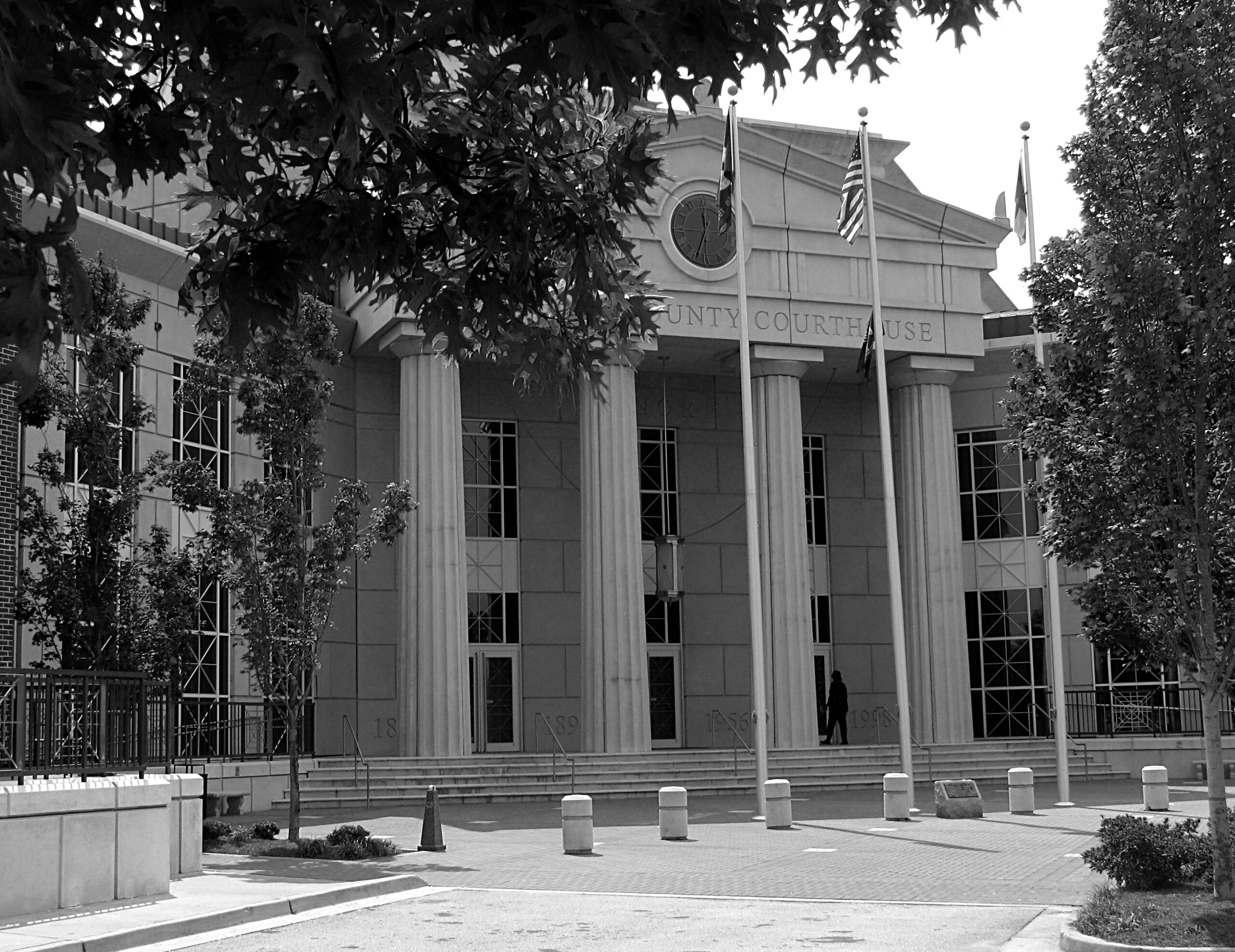

The Justice of the Peace Galveston County Precinct 4
The Justice of the Peace Galveston County Precinct 4 is presided over by the Honorable Michael W. Nelson. The court is located at 11730 Highway 6, Santa Fe, Texas 77510. The Texas Constitution requires that each county in the State establish between one and eight justice of the peace precincts, depending upon the population of the county. Also, depending on the population of the precinct, either one or two justice of the peace courts are to be established in each precinct. In Galveston County there are 9 Justice of the Peace Courts. You may find them here. The Justice of the Peace Galveston County Precinct 4 web site is located here.
There are approximately 823 justice of the peace courts in Texas for the 254 counties. Judge Michael W. Nelson has jurisdiction of civil matters in which the amount in controversy is not more than $10,000, exclusive of interest. Before September 1, 2007, the jurisdiction of the Judge Michael W. Nelson was limited to claims up to $5,000.00. Judge Michael W. Nelson also has jurisdiction of suits relating to enforcement of a deed restriction of a residential subdivision that does not concern a structural change to a dwelling. The Justice of the Peace Galveston County Precinct 4 Judge Michael W. Nelson also has jurisdiction of Eviction Cases. Rules 523, of the Texas Rules of Civil Procedure govern procedures in the Justice Courts. All rules governing the district and county courts also govern the Justice Courts insofar as they can be applied, except where otherwise specifically provided by law. Rule 523, Texas Rules of Civil Procedure. The Texas Rules of Evidence govern civil proceedings in the Justice Courts. Rule 101, Texas Rules of Evidence.
FILING A SMALL CLAIMS or JUSTICE COURT SUIT in The Justice of the Peace Galveston County Precinct 4
VENUE
Please review the map above to see where venue is proper for your lawsuit
JURISDICTION
Justice Court Suit is a civil suit for money damages, possession of real property, and enforcement of liens on personal property. The amount of controversy must be for no more than $10,000 or less, interest excluded.
Small Claims Court Suit is a civil suit for money damages only (you may not recover personal property). The amount in controversy must be for no more than $10,000 or less, interest included.
DAMAGES
The amount of money you are suing for is called “damage”. The amount of damage sought must be supported by evidence. A plaintiff may not reduce the amount of the underlying claim in order to maintain a suit in the Justice Court or Small Claims Court!
PARTIES TO THE SUIT
NAME OF THE PLAINTIFF:
This is the party that is instituting the suit. Only the individual(s) or company(ies) named at the top of the Petition as Plaintiff(s) may collect a Judgment in favor of the Plaintiff.
NAME OF THE DEFENDANT:
You must sue the Defendant(s) in their proper legal capacity. If you name the Defendant wrong or misspell the Defendant(s) name you may be prevented from recovery. Be extra cautious when naming the Defendant.
As an Individual: You must sue the Defendant individually in the following two situations:
(1) The Defendant is personally responsible to you for damages he/she may have caused you, and
(2) The Defendant in an individual capacity operating a proprietorship or partnership is responsible to you for damages he/she may have caused.
As a Proprietorship or Partnership: A proprietorship or partnership is a business that is not incorporated, but has filed an “Assumed Name” with the County Clerk of Harris County Texas.
As a Corporation: If the business that has injured you is incorporated, you must contact the Texas State Comptroller’s Office at (800) 252-1386, or the Texas Secretary of State at (512) 463-5555. Ask for the name and address for service of the Registered Agent for service of the corporation (the President or Vice-President will also work). This is the person who has been authorized to receive information regarding lawsuits filed against this corporation. .”
CITATION
Constable or Sheriff, in the County where the Defendant is located, must serve each Defendant personally. It is your responsibility to insure service of your citations. If you obtain a better address for the Defendant, call the Court and the Constable or Sheriff and provide the new information as soon as possible for service of the citation in The Justice of the Peace Galveston County Precinct 4.
STATING YOUR CLAIM
State the nature of your claim fully, listing specific facts and circumstances about your claim. You must itemize how you obtained the total amount of your claim if it involves more than one item.
AFTER SUIT IS FILED
SERVICE OF CITATION
The Justice of the Peace Galveston County Precinct 4, after you have filed your petition the Small Claims or Justice Court, will issue and forward the Citation(s) to the Texas Constable or Sheriff’s office you have indicated for service on the Defendant(s). Check periodically by telephone either with the Clerk of the Court or the Constable or Sheriff’s office directly.
ANSWER
Once the Citation has been served the Defendant must file a written answer to the suit on or before the Monday next following the expiration of ten (10) days, beginning with the date of service.
SERVICEMEMBERS’ CIVIL RELIEF ACT (SCRA)
If the Defendant does not file an answer to the lawsuit, or does not appear in court, the Plaintiff will NOT be able to receive a “default judgment” unless the Plaintiff first files with the Court a Service members’ Civil Relief Act Affidavit stating, under oath, that the Defendant is not in the military service on active duty status. The Department of Defense maintains a secure website where the Plaintiff can obtain a status record. This website requires registration of name and address, fax and telephone numbers, email address and mother’s maiden name, in order to use the website. This form may be downloaded from some Court’s websites, or requested from the address below:
REPRESENTATION
Justice of the Court Precinct 4, a party may represent himself/herself regardless of whether he/she is an individual, proprietorship, or corporation. The Texas Rules of Evidence and Texas Rules of Civil Procedure are in effect in Justice Court suits, but not in Small Claim Court suits.
TRIAL
If the Defendant files a written answer in a Justice Court case, some Local Rules require that Forty Five (45) days pass before the case can be set for trial. You will receive written notice of your Court date. If you change your address or phone number please notify the Court immediately. Please arrive on time for your scheduled trial or hearing.
DISCOVERY
Discovery is used to describe many different ways of obtaining information and evidence prior to trial, to be used at trial. While discovery is common in Justice Court cases, the permission of the judge must be sought for limited discovery in Small Claims cases. Examples of discovery include:
• Interrogatories (written questions requiring sworn answers);
• Requests for Admissions (written statements requiring sworn admission or denial);
• Requests for Production (written requests to produce evidentiary items for examination by the opposing party prior to trial) less common at the Justice Court level, oral depositions of witnesses are taken before a court reporter. Most discovery documents come with directions attached. Read them carefully! Failure to respond to discovery in a timely manner may result in the loss of the case.
NO WRITTEN RECORD
The The Justice of the Peace Galveston County Precinct 4 forums are not “courts of record.” There is no court reporter recording witness testimony. In ALL Small Claims and Justice Courts recording devices are not permitted without the judge’s prior consent.
SUBPOENAS
Witnesses: If there are witnesses who will not come to Court voluntarily, you may request that a Subpoena be prepared and served to secure their presence in Court. This should be done at least two weeks before trial in order to allow for service of the Subpoena.
Evidentiary Subpoenas: If the Defendant or any other witness has documentation that you do not have, and that is necessary to prove your case, you may have the person who has control of the evidence subpoenaed to bring the documentation to Court. The items you want must be listed clearly and attached to the Subpoena. All of the other information mentioned above is also applicable to evidentiary subpoenas.
JURY REQUEST
If you desire a trial by jury you must pay a jury fee at time you file your petition.
WHAT HAPPENS AFTER TRIAL?
APPEAL INFORMATION
Either party has ten (10) days in which to appeal the Judge’s decision. An appeal bond must be filed with the Court on or before 4:30pm on the 10th day after the date of Judgment. Appeals filed after this date will be denied.
• Contact the Court and find out the amount of the appeal bond required for your appeal.
• Prepare a Surety Bond for the entire amount of the Appeal Bond required by the Court.
• Pay a $10.00 Transcript fee
The The Justice of the Peace Galveston County Precinct 4 will then prepare a Transcript of the pleadings on file in your case and send it to the County Court Clerk for the County where the initial Small Claims or Justice Court lawsuit was filed. All Court contact from this point on will be with the County Court. There will be filing fees required from the County Court, and they will contact the party who is appealing regarding payment of those fees.
MOTION FOR NEW TRIAL
Motions for New Trial must be filed in writing within five (5) days from the date of the Judgment
COLLECTION OF JUDGMENTS
If you receive a Judgment against the Defendant and the Defendant does not file a Motion for New Trial within five (5) days, does not file an Appeal within ten days, or does not pay the Judgment within ten (10) days you may seek other remedies to collect your Judgment.
ABSTRACT OF JUDGMENT: You may obtain an Abstract of Judgment any time after the 11th day from the date of Judgment. The cost of an original Abstract is Five Dollars ($5.00), and you may obtain them from the Small Claims or Justice Court. The Abstract should be in any County where you think the Judgment Debtor may own real property.
WRIT OF EXECUTION: You may obtain a Writ of Execution any time after the 30th day from the date of Judgment. A Writ of Execution allows a Sheriff or Constable to try and seize certain non-exempt property from the Defendant. If property is seized, an auction will be held and the proceedings from the sale will satisfy your Judgment.
WRIT OF GARNISHMENT: A Writ of Garnishment is available 7 Days after the date of Judgment. Texas allows bank accounts but not wages to be garnished.
TURNOVER WRIT: This process requires a Court hearing. This may include turnover of non-exempt property and tax refunds.
HOW TO PAY JUDGMENTS WHEN THE JUDGMENT HOLDER CANNOT BE FOUND
If one party to whom a judgment is owed cannot be located, it is possible to pay the judgment into the registry of the court on a showing of good faith attempts by the judgment debtor to locate the prevailing party. Once the court is satisfied that the party cannot be located, the payment can be accepted and the court can issue a release. The money is then held until claimed by the party to whom it is owed, or the money is forfeited to the State of Texas.
Please visit our website for more information about us and bankruptcy. You may also view our video with Bankruptcy Information.
Call us today at (713) 974-1151 to schedule a no-obligation consultation or feel free to email us at [email protected].
We handle bankruptcy cases in all of these counties: Brazoria, Chambers, Galveston, Matagorda, Austin, Brazos, Colorado, Fayette, Fort Bend, Grimes, Harris, Madison, Montgomery, San Jacinto, Walker, Waller, Whartonand following cities in Galveston County, Texas, Bayou Vista, Clear Lake Shores, Dickinson, Friendswood, Galveston,
Hitchcock, Jamaica Beach, Kemah, La Marque, League City, Santa Fe, Texas City, Tiki
Island, Bacliff, Bolivar Peninsula, San
Leon, Algoa, Bayview, Crystal Beach, Gilchrist, High Island & Port Bolivar
[paypal-donation]